TAKE ACTION NOW
Flood the NRC with comments before August 31
The Nuclear Regulatory Commission has proposed rule NRC-2025-1140-0001 in response to Executive Order 14300. These changes will reshape how nuclear reactors, fuel manufacturing facilities, radioactive waste projects, and other nuclear activities are licensed and regulated — and weaken protections for generations.

Deadline: August 31, 2026, at 11:59 PM ET
There is no limit to how many times you can comment., via regulations.gov or federalregister.gov
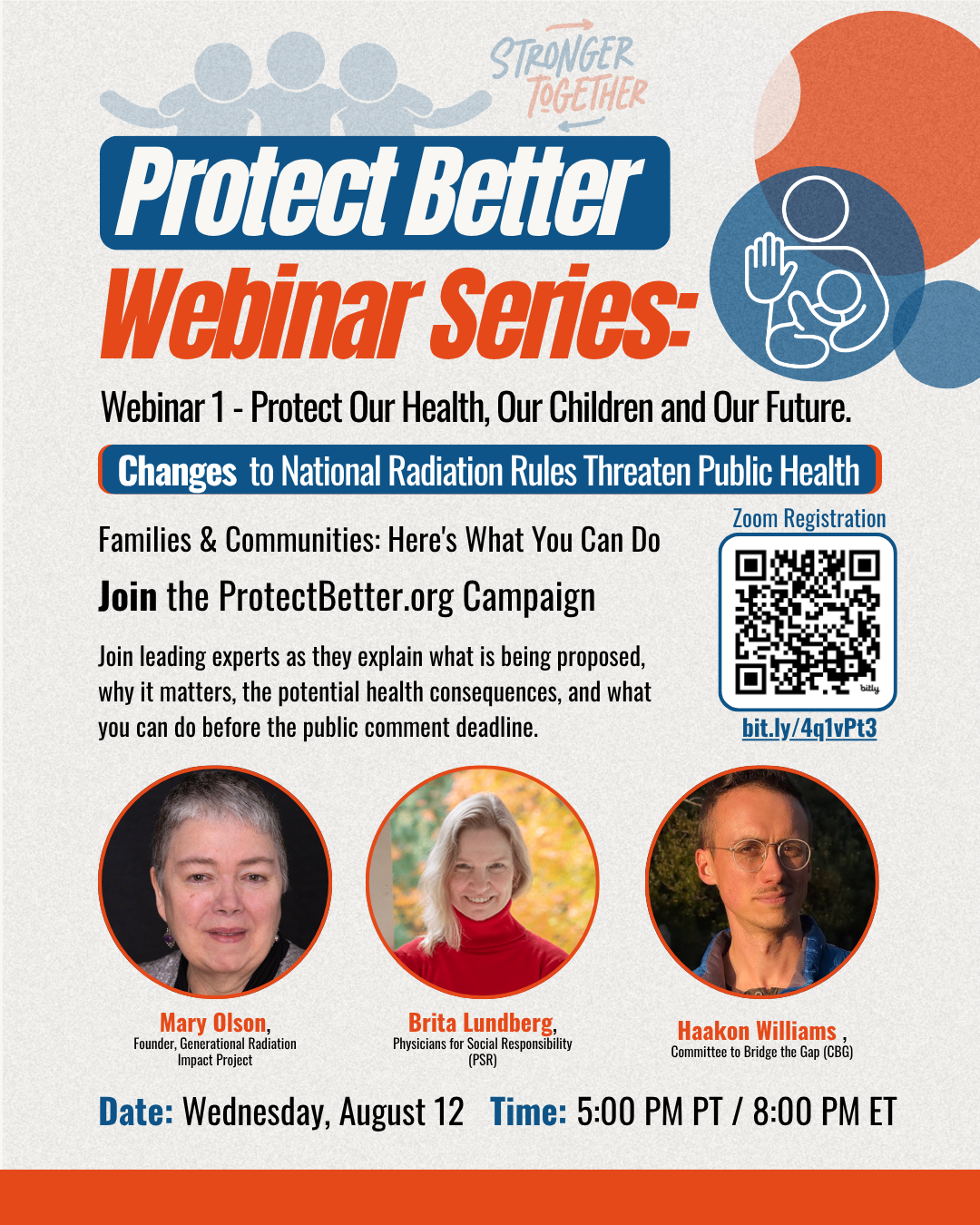
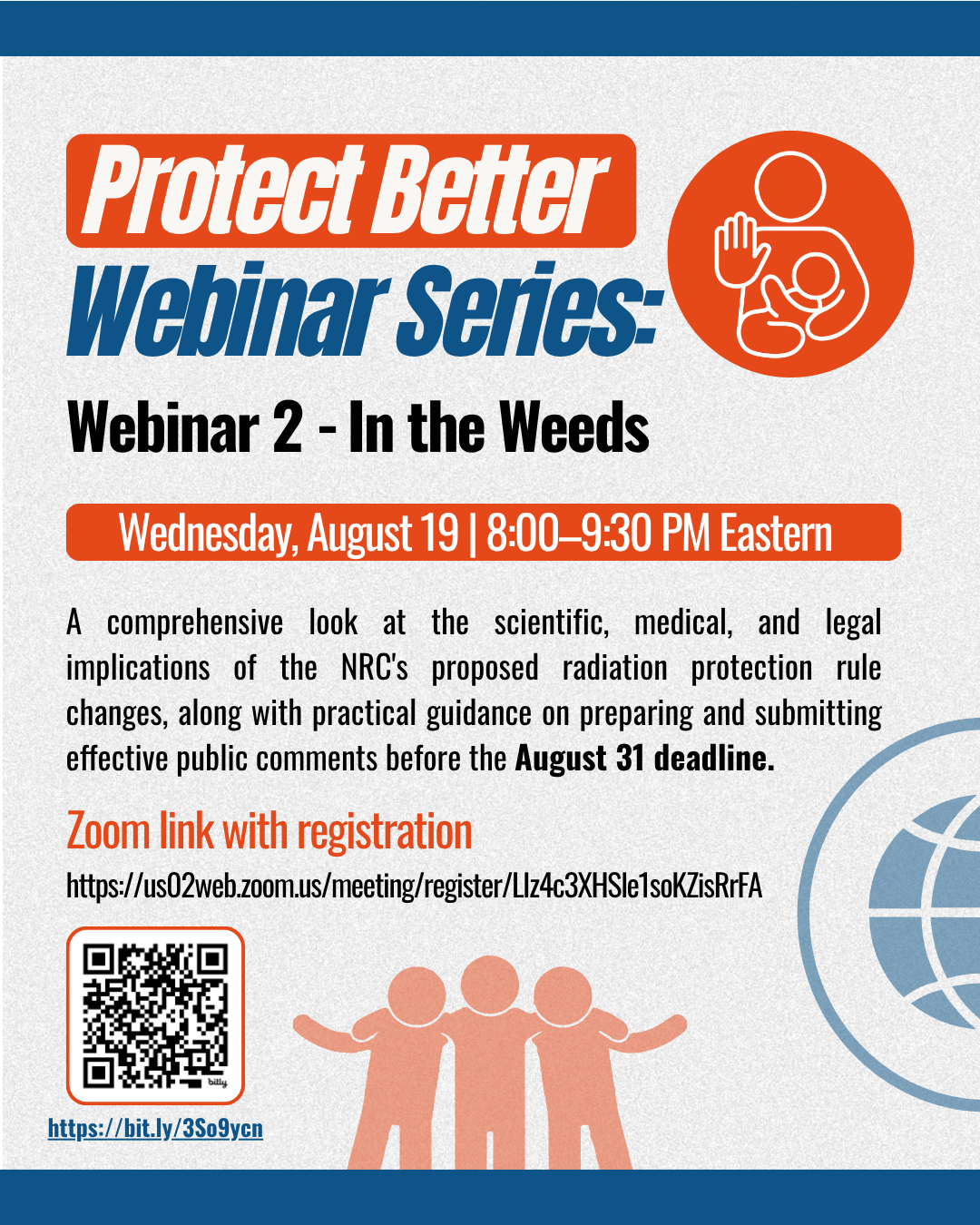
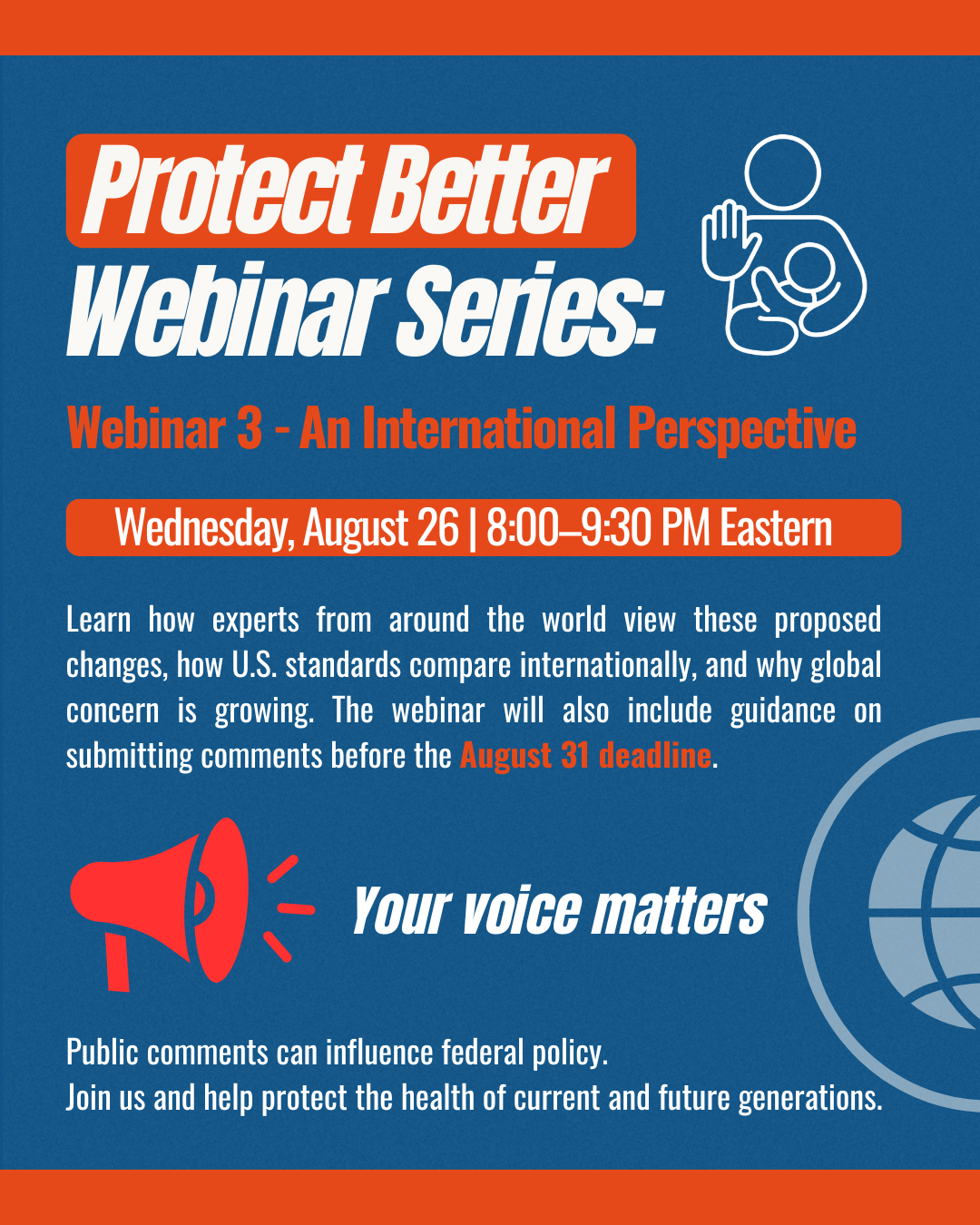
Protect Better Webinar Series:
Protect Our Health, Our Children and Our Future.
-
![]()
Webinar 1
Date: Wednesday, August 12
Time: 5:00 PM PT / 8:00 PM ET
-
![]()
Webinar 2
Date: Wednesday, August 19
Time: 8:00 PM / 9:30 PM ET
-
![]()
Webinar 3
Date: Wednesday, August 26
Time: 8:00 PM / 9:30 PM ET
How to write your comment
Do not copy and paste. Comments must be in your own words to be counted. Short, personal, and specific is better than long and generic. You don't need to be an expert.
Introduce yourself
Share where you're from and your occupation or another descriptor about you.
1
"My name is [name], and I am a [occupation] in [city, state]."
State your position
Be clear that you oppose proposed rule NRC-2025-1140 and what you are urging the NRC to do.
"I am writing to strongly oppose proposed rule NRC-2025-1140 and urge the NRC to strengthen radiation protection standards, not weaken them."
Use your own lived experience or any of the facts on this page. Give as many reasons as you'd like.
2
Explain why it matters to you
"I am concerned about this rulemaking because…" / "This will have direct impacts on my community because…"
Conclude by restating your position
Close by urging the NRC to take specific action.
"For these reasons, I urge the NRC to strengthen radiation protection standards and reject the proposed revisions from EO 14300 Section 5(b)."
Talking points you can use
3
This rule eliminates ALARA — the longstanding As Low As Reasonably Achievable standard — exempting industry from precautions that prevent spread of radioactivity to workers, the public, and the environment. (Federal Register Vol. 91, No. 134, p. 43463)
This rule does not keep up with radiation science, which shows that even one radioactive particle, if ingested via air, food, or water, can cause cancer or illness.
4
Current standards are based on an adult male body — not women, not children, not girls. Girls face higher lifetime cancer risks. Pregnancy exposures can affect three generations at once.
Industry will be allowed to expose the public to more radioactive pollution just by asking for an exemption, effectively deregulating itself.
There is no obvious way for the public to object to or refuse radioactive exposures under this rule — it amounts to silencing public opposition.
The NRC claims to maintain current protection levels while weakening them — a duplicitous claim. This proposed rule shifts cost from industry to public health.
ASK THE NRC TO
Maintain science-based standards
Preserve the Linear No-Threshold model and the ALARA principle and actually provide greater protection for workers and the public.
Protect emergency planning
Maintain emergency planning requirements for communities living near nuclear facilities.
Protect public participation
Preserve meaningful opportunities for communities to participate, including the ability to say no to projects that could harm them.
Ensure independent oversight
Keep safety oversight independent and public health protections intact not weakened in the name of faster industry approvals.
Require thorough environmental reviews
Require strong radiation protection standards in all environmental reviews for proposed nuclear projects.
Reject EO 14300 Section 5(b)
Reject the proposed revisions that come from Section 5(b) of Executive Order 14300 and defend the public's health.
Your comment matters. Submit before August 31.
Communities must have a voice in decisions that affect their health, environment, and future generations.
These decisions will have health impacts for generations to come.
Both sites accept comments on NRC-2025-1140-0001